« Understanding UDDI | Main | Geek Dinner Tonight »

Algorithmic Authorizations

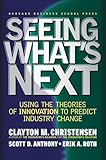
Yesterday I was reading Seeing What’s Next: Using Theories of Innovation to Predict Industry Change by Clayton M. Christensen, Erik A. Roth and Scott D. Anthony and came across a story about how credit scoring changed the loan industry:

In 1956, Fair, Issac created a standard predictive risk-assessment tool. It dramatically simplified the process of judging creditworthiness with a statistical methodology that plugged variables from an applicants credit history into an algorithmic formula that produced a score. Credit scoring’s robust, scientifically based, quick assessment enabled a broader population of less-skilled people to make lending decisions.

It occurred to me that this was, essentially, an algorithmic authorization to access a certain amount of credit. In most authorization regimes, we conceive of a two-dimensional look-up tables that says whether a particular identity or role (one dimension) is allowed access to a particular resource (the second dimension). Building these two dimensional tables to completely specify authorizations for all the roles in a company, say, and all it’s resources is difficult and once done quickly out of date.

Being able to compute authorizations from the attributes associated with an identity would make this problem more tractable. Can anyone think of other examples besides credit scoring where authorization to access a resource is computed instead of being lookup up in a table?

By the way, I’ll have more to say about this book later. It’s a very good read and contains some valuable theories and analysis methods.

Posted by windley on January 17, 2006 6:40 AM

See related posts:

5 Comments

Comment from Kevin Tew at January 17, 2006 2:47 PM

We often think of authorizations as a boolean process resulting in either acceptance or denial.

In other words authorization is assumed to be a simple function of authenticated symbols being reduced to a boolean value True or False.

In the two dimensional case
SymbolType1 -> SymbolType2 -> Boolean
Which generalizes to
(SymbolType1, SymbolType2, ...) -> Boolean

While we simply the authorization process as a table lookup to explain the concept, I believe that almost all authorization processes are already computational processes, in order to make the problem more tractable.

Examining group membership attributes of an identity or role is an example of how current authorization processes use attributes associated with identity to reduce the table size, making the problem more manageable.

On the other hand we can argue that examining group membership attributes is really just
a subordinate table lookup. In which case we could view it as only on optimization to reduce the original identity/role vs resource lookup.

What I find interesting about credit authorization is two things:

1) The credit authorization function is a continuous function whereas we assume most authorization functions are discrete, returning only boolean values, Yes or No.

2) The credit authorization function uses statistics to see what segment of the population you are most probable to be a member of according to the credit attributes associated with identity.

If we take statistics away from the credit authorization process above, all we are left with is rules. Rules are just table lookups, such as is identity X a member of group Y. While rules optimize the tractability problem by reducing table size, we really haven't changed the problem.

The statistics component in the credit authorization problem is the key in my opinion. In this case, statistics is just a feedback loop of auditing and accountability.

Some of this thinking comes from being neck deep in XQuery parsing and Perl6 rules.
Dan Greer, however was the one that pointed out that auditing and accountability scale, while authorization doesn't.

So I posit that credit authorization scales because it is a rules framework that uses auditing and accountability data.

Ok this was a long comment. I may be crazy.
Comments and corrections welcome.

I'm not sure that a computable approach is secure enough for authorization purposes. I mean, a credit ratings system that, via its statistical approach, sometimes grants "false positive" credit, simply had to be able to absorb that much financial damage. Imagine, however, that you use a statistical algorithm to determine whether someone has access to a corporate database - either the threshold is set so high that legitimate users are barred from obtaining access, or you set the standard lower and - poof! - all your data are belong to us!

That's the point, though. In some situations, we may be able to absorb quantifiable risk in exchange for the ability to do more than simply audit and less than full-blown, role-based authorization (with it's attendent costs).

I am not very convinced that the statistical approach can be applied to authorization. In case of credit scoring the worst case scenario of a "false positive" will mean that the damage is well quantifiable (in terms of stats and probability) and people using the system are well aware of the risk and are ready to live with the risk.

The authorization "false positive" on the other hand has bigger consiquences like identity theft, inside trading and possibly SOX compliance failure which has much larger consiquences. It may make sense for these to be first line of defence (like being integrated with self-learning IPS) to keep check over statistical anomaly and apply the controls but the last line of defence will always be needed to enforce corporate and national policies for access control (which do not translate well to algorithms most of the time).

Thoughts!!

I'm not suggesting that a statistical approach is right for EVERY authorization problem, just that it might be better for some.

You mention SOX compliance, for example. I think you could convince auditors you were SOX compliant in many cases with a computed risk and post-hoc audits to find and shutdown problems.

But beyond that, I'm more interested in extending authorization to regimes that it can't be profitably used now. What if I want to restrict access to some documents and can live with computed risk that they might be viewed by an authorized person? That would certainly be better than having no authorization scheme (which is where 99% of all corporate documents live today).