It's Not Just What Agents Can Do...It's When They Can Do It!
Agents don't just perform actions; they execute plans where the safety of each step depends on what has already happened. That makes sequencing an authorization problem. This post explores how policy, delegation data, and multi-signature approval can govern the order in which agents receive authority, not just the scope of it.
Continue reading {It's Not Just What Agents Can Do...It's When They Can Do It!}
Agentic AI and Dynamic Authorization: A Series Recap
I've been exploring how policy, delegation, and continuous authorization can make agentic AI systems useful without making them ungovernable. This post ties together nine essays that trace that journey from foundational ideas to practical patterns.
Continue reading {Agentic AI and Dynamic Authorization: A Series Recap}
A Legal Identity Foundation Isn't Optional
Modern verification systems force individuals to rely on institutions to prove facts about themselves, creating a "proof gap" that becomes untenable in a world of cryptography, AI agents, and machine-speed economic activity. While portable digital credentials can close much of this gap, they depend on a deeper foundation: a publicly governed, legally recognized digital identity that gives people standing, continuity, and enforceable rights across sectors. State-Endorsed Digital Identity (SEDI) provides that non-optional base layer, enabling portable proof, accountable delegation, and interoperable trust infrastructure to function at societal scale.
Continue reading {A Legal Identity Foundation Isn't Optional}
Fix Identity First
The SAVE Act attempts to strengthen election integrity by imposing documentary proof requirements, but in doing so it highlights a deeper problem: the United States lacks a universal, purpose-built identity system. Relying on legacy credentials like birth certificates and driver's licenses creates administrative burdens and risks disenfranchising eligible voters. If stronger identity assurance is truly needed for voting, the real solution is to invest in federated, universal, and accessible identity infrastructure first.
Continue reading {Fix Identity First}
Cross-Domain Delegation in a Society of Agents
Cross-domain delegation requires more than transferring a credential. In a society of agents, policies define boundaries, promises communicate intent derived from those policies, credentials carry delegated authority, and reputation allows trust to emerge through repeated interactions.
Continue reading {Cross-Domain Delegation in a Society of Agents}
Delegation as Data: Applying Cedar Policies to OpenClaw Subagents
Intra-domain delegation enables an agent to grant constrained authority to subagents without expanding the system’s trust boundary. In the OpenClaw + Cedar demo, delegation is modeled as data and enforced by a stable policy set, preserving policy integrity while allowing dynamic scoping of power.
Continue reading {Delegation as Data: Applying Cedar Policies to OpenClaw Subagents}

Explore Technometria
Popular Topics
- Actor Model
- Agentic AI
- Authentication
- Authorization
- Blogging
- Decentralization
- Event Programming
- Identity
- IIW
- Internet of Things
- IT Conversations
- Javascript
- KRL
- Kynetx
- Picos
- Programming
- Programming Languages
- Reactive Programming
- Reputation
- Sovrin
- Startups
You Might Also Enjoy
- Self-Sovereign Identity References
- Best Food Blog on the Planet
- Live Web Whitepapers
- My Slides
- My Videos
- CTO Breakfast
- Essays
- CIO Whitepapers
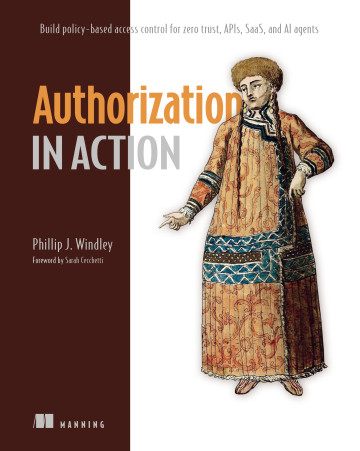
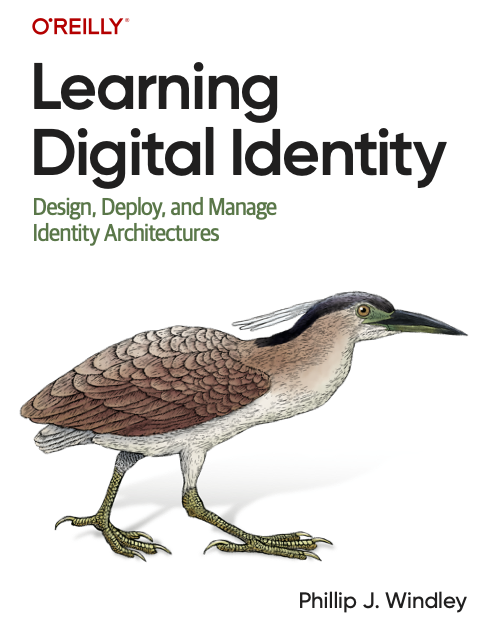
My Books