A Map of the Manifold Environment
A reader asked for a map of the whole Manifold environment and the functional capabilities of each part. I have described this system across three posts, a piece at a time, but never in one picture.
Continue reading {A Map of the Manifold Environment}
The Architecture of Identity Systems
The architecture of an identity system has a profound impact on the nature of the relationships it supports. This post categorizes the high-level architecture of identity systems, discusses the properties of each category to understand architectural influences, and explores what their respective architectures mean to their legitimacy as a basis for online life.
Continue reading {The Architecture of Identity Systems}
Fuse as a Microservice Architecture
Microservices provide a powerful pattern for programming picos with KRL. This post describes microservices and shows how we can view rules within the Fuse system as microservices for a vehicle. We give a detailed, technical example of microservice interaction within Fuse and of a specific rule.
Continue reading {Fuse as a Microservice Architecture}
A General Architecture for Personal Clouds
A public response to an architecture for personal clouds posted by Johannes Ernst on this blog.
Continue reading {A General Architecture for Personal Clouds }
Is Your API Too Fat?
Kode Vicious offers a nice, short tutorial on API design in this month's ACM Queue. Getting the right balance is never easy. I face this question all the time with students in my large scale distributed computing class. KV holds up the UNIX API set for file manipulation as the classic example of good API design: The classic, and perhaps now cliché, example of a good API is the Unix open, close, read, write, ioctl set of system calls for performing file I/O. Unix cheated, in a way, by saying that all files were just streams of bytes without
Continue reading {Is Your API Too Fat?}
Kim Clark on Modularity
I attended a UTC (formerly UITA) breakfast this morning where Kim Clark, President of BYU Idaho and former Dean of the Harvard Business School, was the featured speaker. (photos) Pres. Clark talked about harnessing the power of modularity. I reviewed his book, Design Rules, in January. Design Rules is about modularity in IT and the advantages that it gives. Design Rules was hands down the best book I read in 2005. I think anyone interested in infotech should study it. He begins by pointing out (with a graphic) the staggering dominance of IBM in the IT industry in the
Continue reading {Kim Clark on Modularity}
Federated Identity Feature
SAML Federated ID (InfoWorld)(click to enlarge) My feature on Federated Identity Governance came out today in InfoWorld. There are three pieces: The hidden challenges of federated identity - Federation is the logical goal of identity infrastructures, but achieving it takes more than just technology User-centric identity brings federation close to home- Agreements between peers can add up to an effective federation Scaling a federated identity infrastructure - Most identity federations start small, but as they grow in size you may need to rethink your approach If you read them and want to know more, buy the book!
Continue reading {Federated Identity Feature}
Bret Dixon on SOA
in his keynote presentaiton, Bret Dixon of BEA made an interesting comparison. One viewpoint is that of the single technology stack that has these characteristics: invest to reach homogeneity get everything you need from one vendor replace what you have periodic releases will give you enhancements The other view point is a single service nertwork that has these characteristics: heterogenous products make up a network commitment to open standards uses different products to get needed functionality incremental increase in capacity and functionality SOA means that the software the links applications become more important and are among the most improtant
Continue reading {Bret Dixon on SOA}
Jeff Gleason on Achieving Reusability with SOA
I'm at InfoWorld's SOA Executive Forum this morning in San Francisco. I'll be conducting a panel on SOA governance later this afternoon. There's a sellout crowd. InfoWorld really knows how to put these things together. I also know from working with Eric Knorr, Steve Fox, and other editors at InfoWorld that they try really hard to make sense of this, create good ways to explain it, and develop sound advice. The opening keynote is by Jeff Gleason, Director IT Strategies, Transamerica Life Insurance Company. He's speaking, from experience, on achieving reusability using SOA. Transamerica provides life insurance, pensions, and
Continue reading {Jeff Gleason on Achieving Reusability with SOA}
Answers About Identity
James McGovern asked me some questions about identity. Here are some answers: James: If I work for a premier outsourcing firm and I have been asked to develop a software architecture document describing how identity should work and be consumed within an enterprise application I am thinking about, what should this document look like? That's a question with a long answer. The short answer is "read chapters 13-20 of my book. There are multiple parts, including a data model, a process model, an interoperability framework, a policy set, and multiple reference architectures. Taking the above question, one step further
Continue reading {Answers About Identity}
Defining Reputation
I defined reputation in a recent post. More specifically, I said that reputation isn't identity. Dick Hardt disagrees. To tell the truth, I hadn't remembered that slide from his famous identity presentation. Dick refers to a definition of reputation from dictionary.com reputation: 3. A specific characteristic or trait ascribed to a person or thing and says To me, this makes it clear that reputation is part of your identity. Phil states that identity data is not transaction data or reputation data. I think it is. An example of transaction data being identity: "I'm the guy that bought that black
Continue reading {Defining Reputation}
Cadena: Analyzing Component-Based Software Architectures
John Hatcliff spoke at this morning's BYU Computer Science colloquium. John is a professor of Computer Science at Kansas State University. He's speaking on Model-driven development, analysis, and optimization in a system called Cadena. The project is based on using middleware to form abstractions of distriburted computing components. The talk is focused on a real-time CORBA event service. The "model-driven" portion of the talk discusses formalisms for building high-assurance distributed systems. The framework supports plugging in various light-weight specification, analysis, and verification systems. The work was done in the context of an avionics mission control system project sponsored by
Continue reading {Cadena: Analyzing Component-Based Software Architectures}
Stable Architectures
There's a very informative article in InfoWorld about how Con-Way, the trucking company used SOA to migrate away from their legacy applications piecemeal. The effort required making the architecture explicit first, with the right level of granularity, and then building interfaces. Then various parts can be changed as needed and reintegrated to create new apps. The article says: Although the Con-Way effort began eight years ago, the basic architecture has remained stable and has allowed the company to change its technologies while maintaining the underlying business logic and adding new business logic as the market demands. From Lessons from
Continue reading {Stable Architectures}
International Association of Software Architects
I didn't know there was an International Association of Software Architects. Did you? Membership appears to be free.
Continue reading {International Association of Software Architects}
Trading Performance for Better Design
Phil Windley and Rick Adam at the Business Ignitor talk. It's a timeworn tale in the world of computers: a new technological advance relaxes some design constraints and some of the increased headroom is used by the designers to add modularity of the design with abstract interfaces. Only this time, the story isn't about computers--it's about airplanes. Yesterday I flew my plane up to Ogden to moderate a discussion with Rick Adams, CEO of Adam Aircraft. If you're not a pilot, you probably haven't heard of Adam Air, but it's one of the hot new companies in aviation. I
Continue reading {Trading Performance for Better Design}

Explore Technometria
Popular Topics
- Actor Model
- Agentic AI
- Authentication
- Authorization
- Blogging
- Decentralization
- Event Programming
- Identity
- IIW
- Internet of Things
- IT Conversations
- Javascript
- KRL
- Kynetx
- Picos
- Programming
- Programming Languages
- Reactive Programming
- Reputation
- Sovrin
- Startups
You Might Also Enjoy
- Self-Sovereign Identity References
- Best Food Blog on the Planet
- Live Web Whitepapers
- My Slides
- My Videos
- CTO Breakfast
- Essays
- CIO Whitepapers
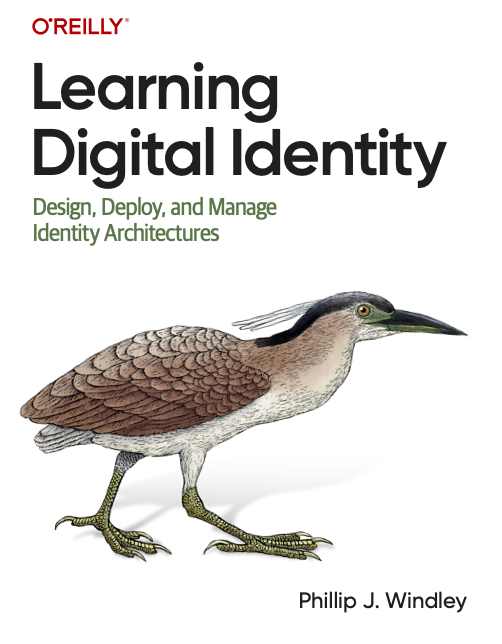
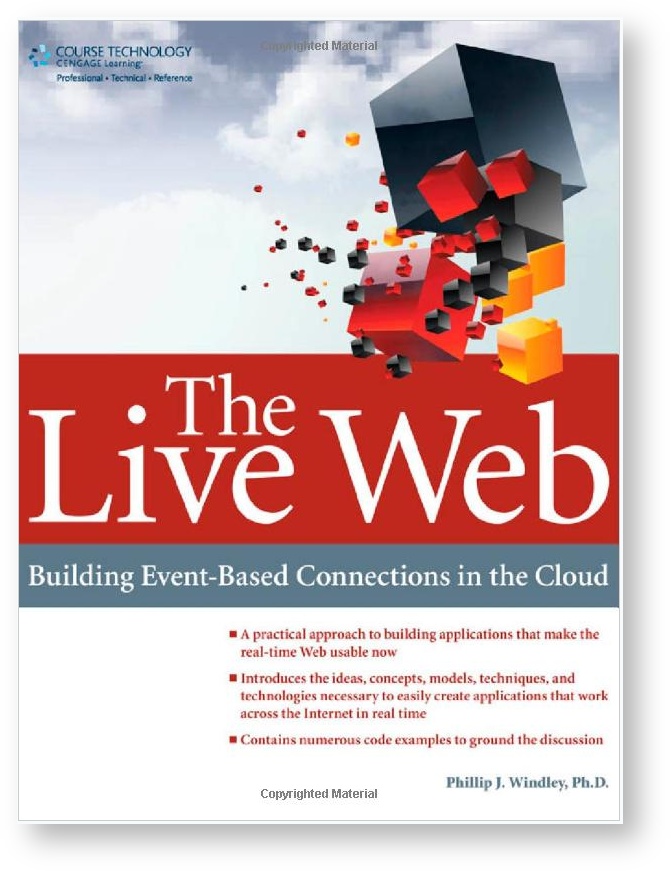
My Books