Visa Isn't Centralized—and Neither Is First Person Identity
Visa isn't centralized. Instead, it's a trust framework that lets thousands of participants interoperate. First-person identity brings that same model to digital identity, enabling not one "identity Visa" but thousands of them, each tailored to the needs of different ecosystems.
Continue reading {Visa Isn't Centralized—and Neither Is First Person Identity}
Let's Stop Phoning Home
The No Phone Home movement challenges digital identity systems that silently report user activity back to central servers, advocating instead for privacy-preserving architectures. Built-in surveillance capabilities, even if unused, concentrate power and risk future misuse. Let's build digital identity systems that serve people, not institutions.
Continue reading {Let's Stop Phoning Home}
First Person Identity
Listening to Drummond Reed at VRM Day, I was struck by how “first person”—a term that resonates more intuitively than “self-sovereign”—captures the essence of empowering individuals to build digital relationships rooted in personal agency, without intermediaries.
Continue reading {First Person Identity}
Digital Identity and Access Control
Until we value freedom and independence in the digital world, we will yield up control of our digital lives to others who will act in their own interests, not ours.
Continue reading {Digital Identity and Access Control}
What Is Decentralized Identity?
What is decentralized identity and why is it important? My attempt at a simple explanation.
Continue reading {What Is Decentralized Identity?}
Decentralized Identity Comes of Age
In session after session, attendees at EIC are hearing the message that decentralized identity is the answer to their identity problems.
Continue reading {Decentralized Identity Comes of Age}
Using X.509 Certs for DID Provenance
The abundance of X.509 certificate authorities who already perform identity proofing for businesses provides a rich resource that can be leveraged to boot the verifiable data ecosystem.
Continue reading {Using X.509 Certs for DID Provenance}
Identity Metasystems and Lessons from Building the Sovrin Foundation
I recently spoke with Riley Hughes of Trinsic on his Future of Identity podcast about the birth of Sovrin Foundation, its inevitable growing pains, self-sovereign identity, identity metasystems, and adoption. Give it a listen. I'm grateful to Riley for having me on as a guest.
Continue reading {Identity Metasystems and Lessons from Building the Sovrin Foundation}
Zero Trust with Zero Data
The physical world is full of zero trust examples, but they gather attributes for the access control decisions in a very different way than we're used to online.
Continue reading {Zero Trust with Zero Data}
Acceptance Networks for Self-Sovereign Identity
We can't have broad adoption of verifiable credentials until we find a way to scale their presentation by providing tooling that credential verifiers can use to reduce their risk and gain confidence in the facts presented to them.
Continue reading {Acceptance Networks for Self-Sovereign Identity}
SSI is the Key to Claiming Ownership in an AI-Enabled World
I've been trying to be intentional about using generative AI for more and more tasks in my life. For example, the image above is generated by DALL-E. I think generative AI is going to upend almost everything we do online, and I'm not alone. One of the places it will have the greatest impact is its use in personal agents, determining whether or not these agents enable people to lead effective online lives. Jamie Smith recently wrote a great article in Customer Futures about the kind of AI-enabled personal agents we should be building. As Jamie points out: "Digital
Continue reading {SSI is the Key to Claiming Ownership in an AI-Enabled World}
Permissionless and One-to-One
Symmetric technology democratizes speech. The web, despite all the good it's done is fundamentally assymetric. We need a model that is permissionless and one-to-one.
Continue reading {Permissionless and One-to-One}
Digital Identity Podcasts
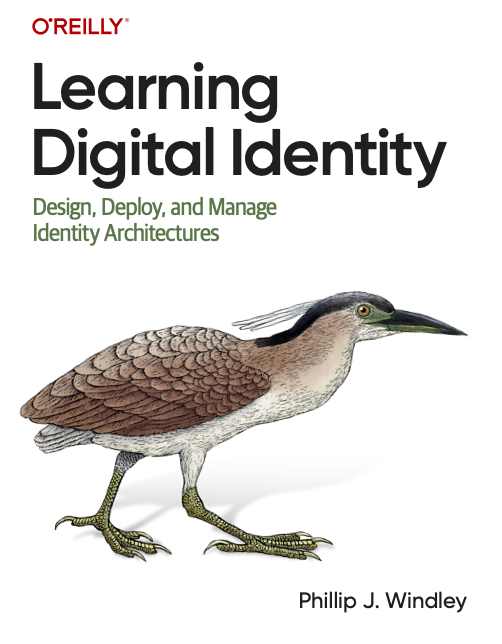
I've been invited to be on a few more podcasts to talk about my new book Learning Digital Identity from O'Reilly Media. That's one of the perks of writing a book. People like to talk about it. I always enjoy talking about identity and especially how it's so vital to the quality of our lives in the digital world, so I'm grateful these groups found time to speak with me. First, I had a great discussion about identity, IIW, and the book with Rich Sordahl of Anonyome Labs. I also had a good discussion with Joe Malenfant of Ping
Continue reading {Digital Identity Podcasts}
Streaming Trust
Federated identity stores are like music CDs: large troves of data to be consumed from a single source. Self-sovereign identity is like streaming: share just what you want, just when it's needed.
Continue reading {Streaming Trust}
Internet Identity Workshop 36 Report
Last week's IIW was great with many high intensity discussions of identity by people from across the globe.
Continue reading {Internet Identity Workshop 36 Report}
Learning Digital Identity Podcasts
If you enjoy listening more than reading, these two podcasts may be just the thing to get you up to speed on learning Digital Identity.
Continue reading {Learning Digital Identity Podcasts}
Why Doesn't This Exist Already?
I've had a busy month. Something had to drop and it was regular updates here. Technological change is messy and hard to predict. Still we can look at the direction in which digital identity is evolving to get an idea what's coming—even if we can't predict the timing.
Continue reading {Why Doesn't This Exist Already?}
SSI Doesn't Mean Accounts Are Going Away
I saw a tweet that said (paraphrasing): "In the future people won't have accounts. The person (and their wallet) will be the account." While I appreciate the sentiment, I think reality is much more nuanced than that because identity management is about relationships, not identities (whatever those are). Supporting a relationship requires that we recognize, remember, and react to another party (person, business, or thing). In self-sovereign identity (SSI), the tools that support that are wallets and agents. For people, these will be personal. For a business or other organization they'll be enterprise wallets and agents. The primary difference
Continue reading {SSI Doesn't Mean Accounts Are Going Away}
Better Onboarding with Verifiable Credentials
Making onboarding easier would result in better customer experience, more customers, and reduced support costs.
Continue reading {Better Onboarding with Verifiable Credentials}
Wallets and Agents
This post is adapted from my forthcoming book, Learning Digital Identity, from O'Reilly Media.
Continue reading {Wallets and Agents}
A Healthcare Utopia of Rules
Verifiable credentials have a number of use cases in healthcare. Using them can reduce the administrative burden that people experience at the hands of the bureaucracies that inevitably develop.
Continue reading {A Healthcare Utopia of Rules}
Using OpenID4VC for Credential Exchange
Verifiable credentials have transport options other than DIDComm. In this post, I explore the OpenID4VC specification which allows credentials to be used in the OpenID ecosystem.
Continue reading {Using OpenID4VC for Credential Exchange}
Transferable Accounts Putting Passengers at Risk
The non-transferability of verifiable credential is one of their super powers. This post examines how that super power can be used to reduce fraud and increase safety in a hired car platform.
Continue reading {Transferable Accounts Putting Passengers at Risk}
Using a Theory of Justice to Build a Better Web3
Building a better internet won't happen by chance or simply maximizing freedom. We have to build systems that support justice. How can we do that?
Continue reading {Using a Theory of Justice to Build a Better Web3}
We Need a Self-Sovereign Model for IoT
The Internet of Things is more like the CompuServe of Things. We need a new, self-sovereign model to protect us from proprietary solutions and unlock IoT's real potential.
Continue reading {We Need a Self-Sovereign Model for IoT}
Privacy, Authenticity, and Confidentiality
Authenticity and privacy are usually traded off against each other. The tradeoff is a tricky one that can lead to the over collection of data.
Continue reading {Privacy, Authenticity, and Confidentiality}
Life is a Metasystem
Rather than being a DAO, the world is a gigantic metasystem that provides numerous tacit capabilities for action and interaction. So, while “Life is a DAO” makes a better t-shirt, I prefer “Life is a Metasystem.” Take the red pill.
Continue reading {Life is a Metasystem}
Framing and Self-Sovereignty in Web3
Self-sovereign identity must be the foundation of Web3 because it is the means for framing ourselves in the digital world and taking action with our peers.
Continue reading {Framing and Self-Sovereignty in Web3}
Web3: Self-Sovereign Authority and Self-Certifying Protocols
When we dine at a restaurant in the physical world, we do not do so within some administrative system. Rather, as embodied agents, we operationalize our relationships by acting for ourselves. Web3, if built correctly, can help people to act as full-fledged participants in the digital realm.
Continue reading {Web3: Self-Sovereign Authority and Self-Certifying Protocols}
A Defacto National ID from ID.me
Last week, I reported ID.me’s claim that they were not doing 1:many facial recognition. Turns out that’s not true… Whether you are a fan of or hate the idea of a national ID, ID.me is on the path to become one. I don’t think having a private third party run the national ID system is a good idea.
Continue reading {A Defacto National ID from ID.me}
IRS Using Facial Scanning
The IRS will use ID.me's authentication and identity proofing service exclusively starting sometime this summer. The identity proofing portion employs facial scanning by a third party, causing some concern.
Continue reading {IRS Using Facial Scanning}
Web3, Coherence, and Platform Sovereignty
I read a couple of interesting things the past few weeks that have me thinking about the world we're building, the impact that tech has on it, and how it self-governs (or not).
Continue reading {Web3, Coherence, and Platform Sovereignty}
Web3 and Digital Embodiment
Web3 will make a difference for all of us if it enables people to become digitally embodied, able to recognize, remember, and react to other people and organizations online—without the need to be in someone else's database.
Continue reading {Web3 and Digital Embodiment}
Leveraging the Identity Metasystem
Metasystems promote network effects because they provide leverage: one infrastructure that not only serves many purposes, but also engenders consistent behavior.
Continue reading {Leveraging the Identity Metasystem}
In Memory of Kim Cameron
Kim Cameron's Laws of Identity are a foundational work in online identity. He used his technical knowledge and position to advance the state of online identity in countless ways over multiple decades. We will miss him.
Continue reading {In Memory of Kim Cameron}
Digital Memories
Digital memories are an important component of our digital embodiment. SSI provides a foundation for self-sovereign digital memories to solve the digital-analog memory divide.
Continue reading {Digital Memories}
Zero Knowledge Proofs
Zero-knowledge proofs are a powerful cryptographic technique at the heart of self-sovereign identity (SSI). This post should help you understand what they are and how they can be used.
Continue reading {Zero Knowledge Proofs}
Identity and Consistent User Experience
Consistent user experience is key enabler of digital embodiment and is critical to our ability to operationalize our digital lives.
Continue reading {Identity and Consistent User Experience }
Token-Based Identity
Token-based identity systems move us from talking about who, to thinking about what, so that people can operationalize their digital lives. Token-based identity systems support complex online interactions that are flexible, ad hoc, and cross-domain.
Continue reading {Token-Based Identity}
NFTs, Verifiable Credentials, and Picos
The hype over NFTs and collectibles is blinding us to their true usefulness as trustworthy persistent data objects. How do they sit in the landscape with verifiable credentials and picos?
Continue reading {NFTs, Verifiable Credentials, and Picos}
Ugh! There's an App for That!
Interoperability is a fundamental property of tech systems that are generative and respect individual privacy and autonomy. And, as a bonus, it makes people's live easier!
Continue reading {Ugh! There's an App for That! }
Fluid Multi-Pseudonymity
Fluid multi-pseudonymity perfectly describes the way we live our lives and the reality that identity systems must realize if we are to live authentically in the digital sphere.
Continue reading {Fluid Multi-Pseudonymity}
Ephemeral Relationships
Many of the relationships we have online don’t have to be long-lived. Ephemeral relationships, offering virtual anonymity, are technically possible without a loss of functionality or convenience. Why don’t they exist? Surveillance is profitable.
Continue reading {Ephemeral Relationships}
Alternatives to the CompuServe of Things
The current model for connected things puts manufacturers inbetween people and their things. That model negatively affects personal freedom, privacy, and society. Alternate models can provide the same benefits of connected devices without the societal and personal costs.
Continue reading {Alternatives to the CompuServe of Things}
Building an SSI Ecosystem: Health Passes and the Design of an Ecosystem of Ecosystems
Ever since the Covid pandemic started in 2020, various groups have seen verifiable credentials as a means for providing a secure, privacy-respecting system for health and travel data sharing. This post explores the ecosystem of ecosystems that is emerging as hundreds of organizations around the world rise to the challenge of implementing a globally interoperable system that also respects individual choice and privacy.
Continue reading {Building an SSI Ecosystem: Health Passes and the Design of an Ecosystem of Ecosystems}
Reciprocal Negotiated Accountability
The self-sovereign internet underscores a tension between those who desire perfect oversight of society and those who desire perfect privacy. In this post, I explore a method for conditional legibility of private communications.
Continue reading {Reciprocal Negotiated Accountability}
The Self-Sovereign Internet
I'm attended the Hyperledger Global Forum this last week–all virtual. I spoke on DIDComm and the Self-Sovereign Internet. If you're not up to speed with DIDComm and how it creates a secure overlay network on TCP/IP, you should be. I consider it one of the most important things to come out of the SSI movement.
Continue reading {The Self-Sovereign Internet}
Building an SSI Ecosystem: MemberPass and Credit Unions
How does a functioning credential ecosystem get started? This post looks at MemberPass, the credit union credential ecosystem and explores the strategies credit unions are using to gain broader adoption.
Continue reading {Building an SSI Ecosystem: MemberPass and Credit Unions}
SSI Interaction Patterns
Interaction patterns in SSI differ from what we see in a traditional IAM system that is performing authentication and authorization. This post discussed three different authentication and authorization patterns and then shows how they are all specializations of the general verifiable credential exchange pattern.
Continue reading {SSI Interaction Patterns}
Comparing X.509 Certificates with SSI
X.509 certificates have been around for 40 years and have proven to be a trustworthy means of exchanging data. So, what are the differences between X.509 ceritificates and SSI? And what are the advantages of each?
Continue reading {Comparing X.509 Certificates with SSI}
Building an SSI Ecosystem: Digital Staff Passports at the NHS
How does a functioning credential ecosystem get started? This post goes deep on Manny Nijjar’s work to create a program for using digital staff passports in the sprawling UK NHS bureaucracy.
Continue reading {Building an SSI Ecosystem: Digital Staff Passports at the NHS}
Passwords Are Ruining the Web
Passwords are ruining the web with awful, lengthy, and inconsistent user experiences. They're insecure and lead to data breaches. The good news is there are good ways for web sites to be passwordless. If you hate passwords, build the world you want to live in.
Continue reading {Passwords Are Ruining the Web}
Generative Identity
Generative identity allows us to live digital lives with dignity and effectiveness, contemplates and addresses the problems of social inclusion, and supports economic equality to everyone around the globe. This article describes the implementation self-sovereign identity through protocol-mediated credential exchange on the self-sovereign internet, examines its properties, and argues for it generative nature from those properties.
Continue reading {Generative Identity}
The Generative Self-Sovereign Internet
The self-sovereign internet, a secure overlay on the internet, provides the same capacity to produce change by numerous, unaffiliated and uncoordinated actors as the internet itself. The generative nature of the self-sovereign internet is underpinned by the same kind of properties that make the internet what it is, promising a more secure and private, albeit no less useful, internet for tomorrow.
Continue reading {The Generative Self-Sovereign Internet}
Relationships in the Self-Sovereign Internet of Things
DIDComm-capable agents provide a flexible infrastructure for numerous internet of things use cases. This post looks at Alice and her digital relationship with her F-150 truck. She and the truck have relationships and interactions with the people and institutions she engages as she co-owns, lends and sells it. These and other complicated workflows are all supported by a standards-based, open-source, protocol-supporting system for secure, privacy-preserving messaging.
Continue reading {Relationships in the Self-Sovereign Internet of Things}
The Self-Sovereign Internet of Things
Self-sovereign identity offers much more than just better ways to log in. The identity metasystem is really a sophisticated messaging system that is trustworthy, secure, and extensible. While decentralized identifiers and verifiable credentials have much to offer the Internet of Things (IoT), the secure messaging subsystem promises an IoT that goes well beyond those initial scenarios. This post gives and introduction to SSI and IoT. The follow-on post goes deeper into what a true Internet of Things founded on SSI can provide.
Continue reading {The Self-Sovereign Internet of Things}
DIDComm and the Self-Sovereign Internet
DIDComm is the messaging protocol that provides utility for DID-based relationships. DIDComm is more than just a way to exchange credentials, it's a protocol layer capable of supporting specialized application protocols for specific workflows. Because of its general nature and inherent support for self-sovereign relationships, DIDComm provides a basis for a self-sovereign internet much more private, enabling, and flexible than the one we've built using Web 2.0 technologies.
Continue reading {DIDComm and the Self-Sovereign Internet}
Operationalizing Digital Relationships
An SSI wallet provides a place for people to stand in the digital realm. Using the wallet, people can operationalize their digital relationships as peers with others online. The result is better, more authentic, digital relationships, more flexible online interactions, and the preservation of human freedom, privacy, and dignity.
Continue reading {Operationalizing Digital Relationships}
The Architecture of Identity Systems
The architecture of an identity system has a profound impact on the nature of the relationships it supports. This post categorizes the high-level architecture of identity systems, discusses the properties of each category to understand architectural influences, and explores what their respective architectures mean to their legitimacy as a basis for online life.
Continue reading {The Architecture of Identity Systems}
Authentic Digital Relationships
Self-sovereign identity, supported by a heterarchical identity metasystem, creates a firm foundation for rich digital relationships that allow people to be digitally embodied so they can act online as autonomous agents.
Continue reading {Authentic Digital Relationships}
Cogito, Ergo Sum
Sovereignty defines the source of our authority to act. Sovereign is the right word for describing the essential distinction between our inalienable self and the administrative identifiers and attributes others assign to us online.
Continue reading {Cogito, Ergo Sum}
Relationships and Identity
We build digital identity systems to create and manage relationships—not identities. We need our digital relationships to have integrity and to be useful over a specified lifetime. Identity systems should provide relationship integrity and utility to participants for the appropriate length of time. Participants should be able to create relationships with whatever party will provide utility. SSI provides improved support for creating, managing, and using digital relationships.
Continue reading {Relationships and Identity}
What is SSI?
If your identity system doesn't use DIDs and verifiable credentials in a way that gives participants autonomy and freedom from intervening administrative authorities, then it's not SSI.
Continue reading {What is SSI?}

Explore Technometria
Popular Topics
- Actor Model
- Agentic AI
- Authentication
- Authorization
- Blogging
- Decentralization
- Event Programming
- Identity
- IIW
- Internet of Things
- IT Conversations
- Javascript
- KRL
- Kynetx
- Picos
- Programming
- Programming Languages
- Reactive Programming
- Reputation
- Sovrin
- Startups
You Might Also Enjoy
- Self-Sovereign Identity References
- Best Food Blog on the Planet
- Live Web Whitepapers
- My Slides
- My Videos
- CTO Breakfast
- Essays
- CIO Whitepapers
My Books