A Legal Identity Foundation Isn't Optional
Modern verification systems force individuals to rely on institutions to prove facts about themselves, creating a "proof gap" that becomes untenable in a world of cryptography, AI agents, and machine-speed economic activity. While portable digital credentials can close much of this gap, they depend on a deeper foundation: a publicly governed, legally recognized digital identity that gives people standing, continuity, and enforceable rights across sectors. State-Endorsed Digital Identity (SEDI) provides that non-optional base layer, enabling portable proof, accountable delegation, and interoperable trust infrastructure to function at societal scale.
Continue reading {A Legal Identity Foundation Isn't Optional}
Let's Stop Phoning Home
The No Phone Home movement challenges digital identity systems that silently report user activity back to central servers, advocating instead for privacy-preserving architectures. Built-in surveillance capabilities, even if unused, concentrate power and risk future misuse. Let's build digital identity systems that serve people, not institutions.
Continue reading {Let's Stop Phoning Home}
Establishing First Person Digital Trust
Key signing parties attempted to establish decentralized trust but they ultimately failed due to poor usability, lack of incentives, and shallow trust models. Verifiable Relationship Credentials (VRCs) provide a modern, peer-to-peer approach that enables actionable, contextual trust built on decentralized identifiers, and secure messaging. First-person identity emerges from direct connections that form relationships, mutual authentication, and portable, verifiable trust.
Continue reading {Establishing First Person Digital Trust}
What Is Decentralized Identity?
What is decentralized identity and why is it important? My attempt at a simple explanation.
Continue reading {What Is Decentralized Identity?}
Decentralized Identity Comes of Age
In session after session, attendees at EIC are hearing the message that decentralized identity is the answer to their identity problems.
Continue reading {Decentralized Identity Comes of Age}
Using X.509 Certs for DID Provenance
The abundance of X.509 certificate authorities who already perform identity proofing for businesses provides a rich resource that can be leveraged to boot the verifiable data ecosystem.
Continue reading {Using X.509 Certs for DID Provenance}
Web 2.0 is Collapsing Under its Own Weight
The overhead of performing even simple tasks online is getting larger and larger. I question the security of almost all these supposedly "secure" messaging systems. And I'm tired of the 'Utopia of Rules' mindset pervasive in every organization. It's exhausting how they expect customers to constantly adapt to their needs.
Continue reading {Web 2.0 is Collapsing Under its Own Weight}
Zero Trust with Zero Data
The physical world is full of zero trust examples, but they gather attributes for the access control decisions in a very different way than we're used to online.
Continue reading {Zero Trust with Zero Data}
SSI is the Key to Claiming Ownership in an AI-Enabled World
I've been trying to be intentional about using generative AI for more and more tasks in my life. For example, the image above is generated by DALL-E. I think generative AI is going to upend almost everything we do online, and I'm not alone. One of the places it will have the greatest impact is its use in personal agents, determining whether or not these agents enable people to lead effective online lives. Jamie Smith recently wrote a great article in Customer Futures about the kind of AI-enabled personal agents we should be building. As Jamie points out: "Digital
Continue reading {SSI is the Key to Claiming Ownership in an AI-Enabled World}
Zero Data
Like Zero Trust, Zero Data represents a paradigm that organizations can embrace to enhance their overall security posture. But the benefits go far beyond better security.
Continue reading {Zero Data}
Streaming Trust
Federated identity stores are like music CDs: large troves of data to be consumed from a single source. Self-sovereign identity is like streaming: share just what you want, just when it's needed.
Continue reading {Streaming Trust}
Better Onboarding with Verifiable Credentials
Making onboarding easier would result in better customer experience, more customers, and reduced support costs.
Continue reading {Better Onboarding with Verifiable Credentials}
Wallets and Agents
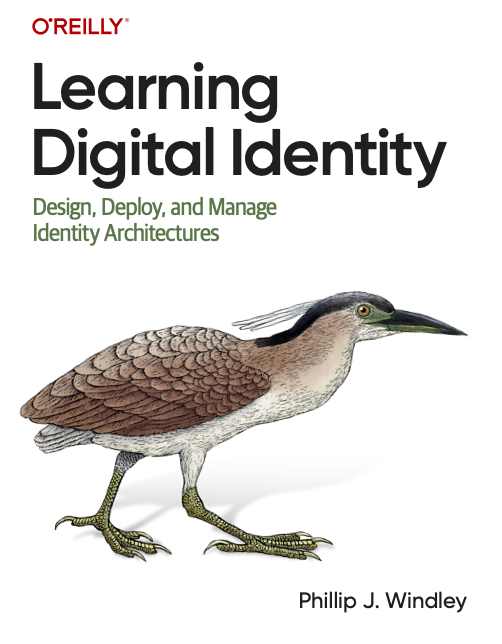
This post is adapted from my forthcoming book, Learning Digital Identity, from O'Reilly Media.
Continue reading {Wallets and Agents}
Verifying Twitter
Elon has started a monthly $8 fee for verified twitter users. A verifiable credential-based solution would be a better way to increase trust in the platform by authenticating users as real people without attendent privacy concerns.
Continue reading {Verifying Twitter}
Using OpenID4VC for Credential Exchange
Verifiable credentials have transport options other than DIDComm. In this post, I explore the OpenID4VC specification which allows credentials to be used in the OpenID ecosystem.
Continue reading {Using OpenID4VC for Credential Exchange}
Transferable Accounts Putting Passengers at Risk
The non-transferability of verifiable credential is one of their super powers. This post examines how that super power can be used to reduce fraud and increase safety in a hired car platform.
Continue reading {Transferable Accounts Putting Passengers at Risk}
Life is a Metasystem
Rather than being a DAO, the world is a gigantic metasystem that provides numerous tacit capabilities for action and interaction. So, while “Life is a DAO” makes a better t-shirt, I prefer “Life is a Metasystem.” Take the red pill.
Continue reading {Life is a Metasystem}
A Defacto National ID from ID.me
Last week, I reported ID.me’s claim that they were not doing 1:many facial recognition. Turns out that’s not true… Whether you are a fan of or hate the idea of a national ID, ID.me is on the path to become one. I don’t think having a private third party run the national ID system is a good idea.
Continue reading {A Defacto National ID from ID.me}
IRS Using Facial Scanning
The IRS will use ID.me's authentication and identity proofing service exclusively starting sometime this summer. The identity proofing portion employs facial scanning by a third party, causing some concern.
Continue reading {IRS Using Facial Scanning}
Leveraging the Identity Metasystem
Metasystems promote network effects because they provide leverage: one infrastructure that not only serves many purposes, but also engenders consistent behavior.
Continue reading {Leveraging the Identity Metasystem}
Zero Knowledge Proofs
Zero-knowledge proofs are a powerful cryptographic technique at the heart of self-sovereign identity (SSI). This post should help you understand what they are and how they can be used.
Continue reading {Zero Knowledge Proofs}
NFTs, Verifiable Credentials, and Picos
The hype over NFTs and collectibles is blinding us to their true usefulness as trustworthy persistent data objects. How do they sit in the landscape with verifiable credentials and picos?
Continue reading {NFTs, Verifiable Credentials, and Picos}
Building an SSI Ecosystem: Health Passes and the Design of an Ecosystem of Ecosystems
Ever since the Covid pandemic started in 2020, various groups have seen verifiable credentials as a means for providing a secure, privacy-respecting system for health and travel data sharing. This post explores the ecosystem of ecosystems that is emerging as hundreds of organizations around the world rise to the challenge of implementing a globally interoperable system that also respects individual choice and privacy.
Continue reading {Building an SSI Ecosystem: Health Passes and the Design of an Ecosystem of Ecosystems}
Building an SSI Ecosystem: MemberPass and Credit Unions
How does a functioning credential ecosystem get started? This post looks at MemberPass, the credit union credential ecosystem and explores the strategies credit unions are using to gain broader adoption.
Continue reading {Building an SSI Ecosystem: MemberPass and Credit Unions}
SSI Interaction Patterns
Interaction patterns in SSI differ from what we see in a traditional IAM system that is performing authentication and authorization. This post discussed three different authentication and authorization patterns and then shows how they are all specializations of the general verifiable credential exchange pattern.
Continue reading {SSI Interaction Patterns}
Building an SSI Ecosystem: Digital Staff Passports at the NHS
How does a functioning credential ecosystem get started? This post goes deep on Manny Nijjar’s work to create a program for using digital staff passports in the sprawling UK NHS bureaucracy.
Continue reading {Building an SSI Ecosystem: Digital Staff Passports at the NHS}
The Politics of Vaccination Passports
The societal ramifications of Covid-19 passports are not easy to parse. Ultimately, I believe they are inevitable, so the questions for us are when, where, and how they should be used.
Continue reading {The Politics of Vaccination Passports}

Explore Technometria
Popular Topics
- Actor Model
- Agentic AI
- Authentication
- Authorization
- Blogging
- Decentralization
- Event Programming
- Identity
- IIW
- Internet of Things
- IT Conversations
- Javascript
- KRL
- Kynetx
- Picos
- Programming
- Programming Languages
- Reactive Programming
- Reputation
- Sovrin
- Startups
You Might Also Enjoy
- Self-Sovereign Identity References
- Best Food Blog on the Planet
- Live Web Whitepapers
- My Slides
- My Videos
- CTO Breakfast
- Essays
- CIO Whitepapers
My Books