Why Not SPIFFE for Pico Identity?
A pico is arguably just a workload, so why give it a DID instead of using SPIFFE, the standard workload identifier? The answer comes down to whether the identity is meant to last. SPIFFE derives a workload's identity from what it is and where it runs, so it's re-minted per environment; a pico's identity is long-lived and travels with it.
Continue reading {Why Not SPIFFE for Pico Identity?}
Pico-to-Pico Identity Arrives
Version 1.6 of the Pico Engine ships the pico-to-pico identity layer I promised but hadn't built. Every pico now carries two DIDs: a portable did:webvh that says who it is, and a private did:peer for each relationship it forms. This is the piece that lets a pico move between engines and lets two meshes create a relationship without a federation agreement set up in advance.
Continue reading {Pico-to-Pico Identity Arrives}
The Pressure Behind Identity's Diseconomies of Scale
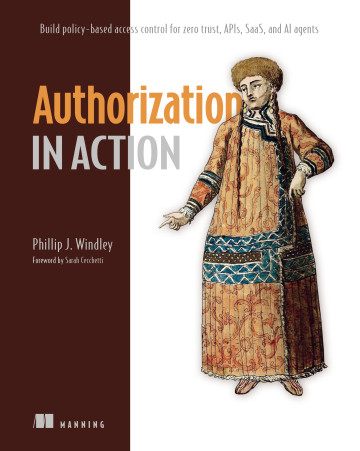
Eve Maler argues that identity's apparent diseconomies of scale are really about gnarliness, not size. That gnarliness has a shape I drew for chapter 19 of my forthcoming book: the gap between a growing decision surface and the infrastructure meant to govern it. That gap is authorization pressure, and it explains why identity gets harder even when a team does everything right.
Continue reading {The Pressure Behind Identity's Diseconomies of Scale}
A Map of the Manifold Environment
A reader asked for a map of the whole Manifold environment and the functional capabilities of each part. I have described this system across three posts, a piece at a time, but never in one picture.
Continue reading {A Map of the Manifold Environment}
Using Home Assistant with Manifold
Manifold is evolving into a proper framework for building meshes of picos, and Home Assistant gives those meshes an interface. A new Home Assistant integration proves out three pieces at once: an OAuth workflow on the pico-engine that lets outside software into the mesh on the owner's terms, a mature interface rather than a custom one, and a pattern that lets specialized communities extend the platform.
Continue reading {Using Home Assistant with Manifold}

Explore Technometria
Popular Topics
- Actor Model
- Agentic AI
- Authentication
- Authorization
- Blogging
- Decentralization
- Event Programming
- Identity
- IIW
- Internet of Things
- IT Conversations
- Javascript
- KRL
- Kynetx
- Picos
- Programming
- Programming Languages
- Reactive Programming
- Reputation
- Sovrin
- Startups
You Might Also Enjoy
- Self-Sovereign Identity References
- Best Food Blog on the Planet
- Live Web Whitepapers
- My Slides
- My Videos
- CTO Breakfast
- Essays
- CIO Whitepapers
My Books