Cross-Domain Delegation in a Society of Agents
Cross-domain delegation requires more than transferring a credential. In a society of agents, policies define boundaries, promises communicate intent derived from those policies, credentials carry delegated authority, and reputation allows trust to emerge through repeated interactions.
Continue reading {Cross-Domain Delegation in a Society of Agents}
Delegation as Data: Applying Cedar Policies to OpenClaw Subagents
Intra-domain delegation enables an agent to grant constrained authority to subagents without expanding the system’s trust boundary. In the OpenClaw + Cedar demo, delegation is modeled as data and enforced by a stable policy set, preserving policy integrity while allowing dynamic scoping of power.
Continue reading {Delegation as Data: Applying Cedar Policies to OpenClaw Subagents}
Why Authorization Is the Hard Problem in Agentic AI
Agentic AI systems expose the limits of static authorization models, which assume permissions can be decided once and remain valid over time. As agents plan, act, and replan, authorization must become a continuous feedback signal that constrains behavior at each step rather than a one-time gate. Dynamic, policy-based authorization enables delegation to be enforced through purpose, scope, conditions, and duration, turning denial into a productive signal that guides replanning instead of a terminal failure.
Continue reading {Why Authorization Is the Hard Problem in Agentic AI}
Web Authentication with Selective Delegation using SRP
Bryant Cutler and Devlin Daley developed a methodology for adding selective delegation to relationship-based identity systems. This afternoon I presented that work at WWW2008. The talk went well. There were probably about 40 people in the room. There were some good questions afterwards, so all in all, I'm pleased. Here are the slides (PDF) if you're interested.
Continue reading {Web Authentication with Selective Delegation using SRP}
Authorization Models and Delegation
I promised yesterday that I'd talk a little more about our discussion on delegation. I've since had a profitable discussion with Devlin and Bryant as well. The problem with delegation is that it requires something that has eluded organizations since computer security first became an issue: how do you build good authorization models? Most applications are built without much prior thought to the authorization model and then it gets slapped on afterwards. For organizations, it's even worse. The business has fuzzy ideas about authorizations and they change them all the time. "Oh, we're spending too much money on catering;
Continue reading {Authorization Models and Delegation}
On Impersonation and Delegation
An Elvis Impersonator(click to enlarge) A couple of my students, Devlin Daley and Bryant Cutler, are doing some work on delegation in OpenID. Kim Cameron has been posting about delegation and that led to some interesting discussions in the lab. First we distinguished between impersonation and delegation. The former is an authentication issue, the second is an authorization issue. Kim's point, and I think fairly made, is that you don't ever want some one other than the entity to whom the identity belongs to authenticate as that identity. Rather, you want the entity (be it a service or human)
Continue reading {On Impersonation and Delegation}

Explore Technometria
Popular Topics
- Actor Model
- Agentic AI
- Authentication
- Authorization
- Blogging
- Decentralization
- Event Programming
- Identity
- IIW
- Internet of Things
- IT Conversations
- Javascript
- KRL
- Kynetx
- Picos
- Programming
- Programming Languages
- Reactive Programming
- Reputation
- Sovrin
- Startups
You Might Also Enjoy
- Self-Sovereign Identity References
- Best Food Blog on the Planet
- Live Web Whitepapers
- My Slides
- My Videos
- CTO Breakfast
- Essays
- CIO Whitepapers
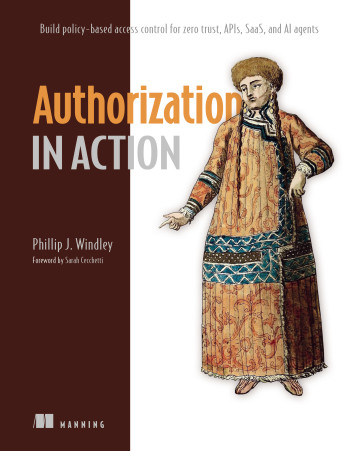
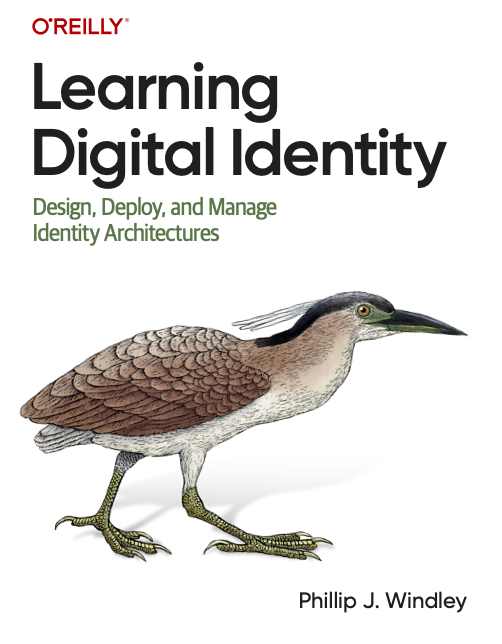
My Books