Moving Picos from Mesh to Mesh
Software that can’t leave the machine it was born on isn’t really yours. Version 1.7 of the pico engine lets a pico and its subtree move between engines while its relationships keep working, because other picos follow its DID rather than its address. This post describes what moves, why identity is what makes it possible, and what’s still ahead.
Continue reading {Moving Picos from Mesh to Mesh}
Pico-to-Pico Identity Arrives
Version 1.6 of the Pico Engine ships the pico-to-pico identity layer I promised but hadn't built. Every pico now carries two DIDs: a portable did:webvh that says who it is, and a private did:peer for each relationship it forms. This is the piece that lets a pico move between engines and lets two meshes create a relationship without a federation agreement set up in advance.
Continue reading {Pico-to-Pico Identity Arrives}
Establishing First Person Digital Trust
Key signing parties attempted to establish decentralized trust but they ultimately failed due to poor usability, lack of incentives, and shallow trust models. Verifiable Relationship Credentials (VRCs) provide a modern, peer-to-peer approach that enables actionable, contextual trust built on decentralized identifiers, and secure messaging. First-person identity emerges from direct connections that form relationships, mutual authentication, and portable, verifiable trust.
Continue reading {Establishing First Person Digital Trust}
Permissionless and One-to-One
Symmetric technology democratizes speech. The web, despite all the good it's done is fundamentally assymetric. We need a model that is permissionless and one-to-one.
Continue reading {Permissionless and One-to-One}
Wallets and Agents
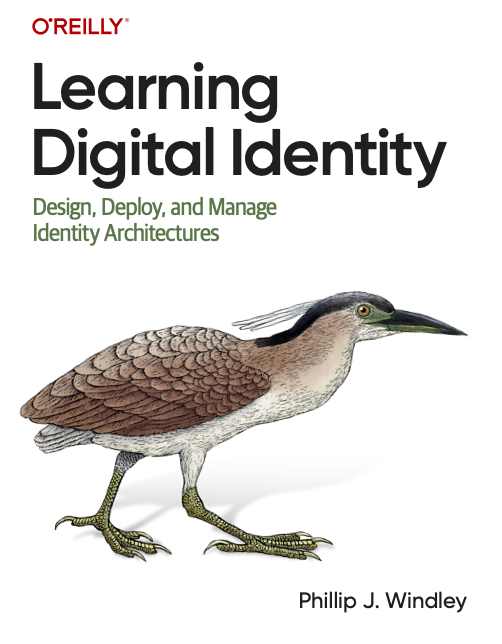
This post is adapted from my forthcoming book, Learning Digital Identity, from O'Reilly Media.
Continue reading {Wallets and Agents}
Web3 and Digital Embodiment
Web3 will make a difference for all of us if it enables people to become digitally embodied, able to recognize, remember, and react to other people and organizations online—without the need to be in someone else's database.
Continue reading {Web3 and Digital Embodiment}
Alternatives to the CompuServe of Things
The current model for connected things puts manufacturers inbetween people and their things. That model negatively affects personal freedom, privacy, and society. Alternate models can provide the same benefits of connected devices without the societal and personal costs.
Continue reading {Alternatives to the CompuServe of Things}
Reciprocal Negotiated Accountability
The self-sovereign internet underscores a tension between those who desire perfect oversight of society and those who desire perfect privacy. In this post, I explore a method for conditional legibility of private communications.
Continue reading {Reciprocal Negotiated Accountability}
The Self-Sovereign Internet
I'm attended the Hyperledger Global Forum this last week–all virtual. I spoke on DIDComm and the Self-Sovereign Internet. If you're not up to speed with DIDComm and how it creates a secure overlay network on TCP/IP, you should be. I consider it one of the most important things to come out of the SSI movement.
Continue reading {The Self-Sovereign Internet}
The Generative Self-Sovereign Internet
The self-sovereign internet, a secure overlay on the internet, provides the same capacity to produce change by numerous, unaffiliated and uncoordinated actors as the internet itself. The generative nature of the self-sovereign internet is underpinned by the same kind of properties that make the internet what it is, promising a more secure and private, albeit no less useful, internet for tomorrow.
Continue reading {The Generative Self-Sovereign Internet}
The Self-Sovereign Internet of Things
Self-sovereign identity offers much more than just better ways to log in. The identity metasystem is really a sophisticated messaging system that is trustworthy, secure, and extensible. While decentralized identifiers and verifiable credentials have much to offer the Internet of Things (IoT), the secure messaging subsystem promises an IoT that goes well beyond those initial scenarios. This post gives and introduction to SSI and IoT. The follow-on post goes deeper into what a true Internet of Things founded on SSI can provide.
Continue reading {The Self-Sovereign Internet of Things}
DIDComm and the Self-Sovereign Internet
DIDComm is the messaging protocol that provides utility for DID-based relationships. DIDComm is more than just a way to exchange credentials, it's a protocol layer capable of supporting specialized application protocols for specific workflows. Because of its general nature and inherent support for self-sovereign relationships, DIDComm provides a basis for a self-sovereign internet much more private, enabling, and flexible than the one we've built using Web 2.0 technologies.
Continue reading {DIDComm and the Self-Sovereign Internet}

Explore Technometria
Popular Topics
- Actor Model
- Agentic AI
- Authentication
- Authorization
- Blogging
- Decentralization
- Event Programming
- Identity
- IIW
- Internet of Things
- IT Conversations
- Javascript
- KRL
- Kynetx
- Picos
- Programming
- Programming Languages
- Reactive Programming
- Reputation
- Sovrin
- Startups
You Might Also Enjoy
- Self-Sovereign Identity References
- Best Food Blog on the Planet
- Live Web Whitepapers
- My Slides
- My Videos
- CTO Breakfast
- Essays
- CIO Whitepapers
My Books