iPhone 4 Underwhelmed Me
I know, they may take away my Apple Fanboy membership card. But the iPhone 4 that came yesterday hasn't blown me away. Here's my initial thoughts: The camera is better and the flash is nice. But it's still a phone camera, not a real camera. The screen is much clearer than my iPhone 3Gs, but not so much that it enables cool new things. . The glass back looks like one more thing to break. Facetime was fun the one time I did it. I'd probably do it a lot with my kids if they were little. Now, not
Continue reading {iPhone 4 Underwhelmed Me}
Agile Roots, ErrorStack, Phones, and Games
At this morning's CTO Breakfast Kay Johansan announced her upcoming Agile Roots conference in Salt Lake City on June 15-16. This looks like a high quality confernce and it's nice to see it local. Tyler Whitaker also demonstrated the new graphing capabilities in ErrorStack. As someone building a distributed system, I love the idea of ErrorStack--a cloud-based error system that just does errors and does them well. I'll probably start using it to track errors for Kynetx. We got a look at the phone that Google gave out at IO yesterday. Someone who was there and got one showed
Continue reading {Agile Roots, ErrorStack, Phones, and Games}
Mossberg on the G1 Phone
Walt Mossberg, the technology reviewer for the Wall Street Journal has a review of the G1, sometimes known as the gPhone. The G1 is Google's competitor to the iPhone. He says: I have been testing the G1 extensively, in multiple cities and in multiple scenarios. In general, I like it and consider it a worthy competitor to the iPhone. Both devices run on fast 3G phone networks and include Wi-Fi. Both have smart-touch interfaces and robust Web browsers. Both have the ability to easily download third-party apps, or programs. But the two devices have different strengths and weaknesses, and
Continue reading {Mossberg on the G1 Phone}
Defining the New Singularity
I'm stil catching up on my IT Conversations listening after being gone on vacation for 10 days. This morning I listened to Mark Rolston's talk from the Emerging Communications conference entitled The New Singularity. Contrary to what you might think from the title, this isn't about "the" Singularity, but rather the idea that we typically have one concept about what a product should and the phone belies that. I really enjoyed the thinking about products and designs. I found myself wishing I could ask a few questions!
Continue reading {Defining the New Singularity}
iPhone Is an OSX Computer
I'm reading Jason O'Grady's live blogging of the Jobs keynote. Jobs just introduced the iPhone saying "Today, we're introducing three revolutionary products 1. widescreen iPod with touch controls 2. revoutionary mobile phone 3. breakthrough internet communication device" But it's not three products, it's one: the iPhone. It runs OS X and has a multi-touch, 160dpi wide-screen--no stylus. Jason said he was considering leaving the keynote to go buy one. Connectivity is both EDGE and Wi-Fi; it switches between them seamlessly. It features a full Safari browser and real email. Where do I get one? Update: You can't get one...until
Continue reading {iPhone Is an OSX Computer}
Nokia's Open Source
Maybe Nokia S60 users are all over this, but I wasn't aware of it until Kelly Flanagan pointed it out to me: Nokia has a small collection of open source projects online. This one, for example, looked pretty interesting: a Symbian port of Apache httpd and connectivity solution that gives a mobile phone a global URL. Of, how about a port of Python for the S60. Phones have suffered from being too much about what the cellular company puts on them and not enough about what users put on them. Of course, the cellular companies do this to create
Continue reading {Nokia's Open Source}
Your Cell Phone Is Watching You
One of my favorite programs from last week was Nathan Eagle's Where 2.0 presentation on using cell phones to predict user behavior. Using only publicly available data, Eagle was able to deduce relationships between pairs and groups of individuals. There are privacy concerns to be sure. Your cell provider already has much of this data. Every time two cell providers merge, what little protection we get from disparate carriers is broken down. What interested me most though it not the privacy concerns, but the potential to infer and enhance social interactions using the wearable computers each of us carries
Continue reading {Your Cell Phone Is Watching You}

Explore Technometria
Popular Topics
- Actor Model
- Agentic AI
- Authentication
- Authorization
- Blogging
- Decentralization
- Event Programming
- Identity
- IIW
- Internet of Things
- IT Conversations
- Javascript
- KRL
- Kynetx
- Picos
- Programming
- Programming Languages
- Reactive Programming
- Reputation
- Sovrin
- Startups
You Might Also Enjoy
- Self-Sovereign Identity References
- Best Food Blog on the Planet
- Live Web Whitepapers
- My Slides
- My Videos
- CTO Breakfast
- Essays
- CIO Whitepapers
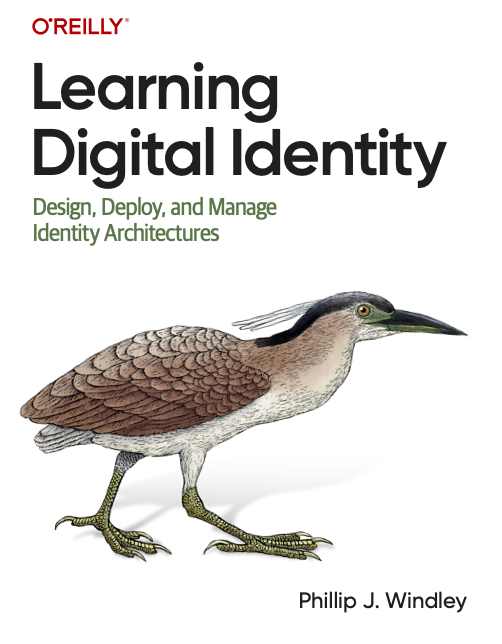
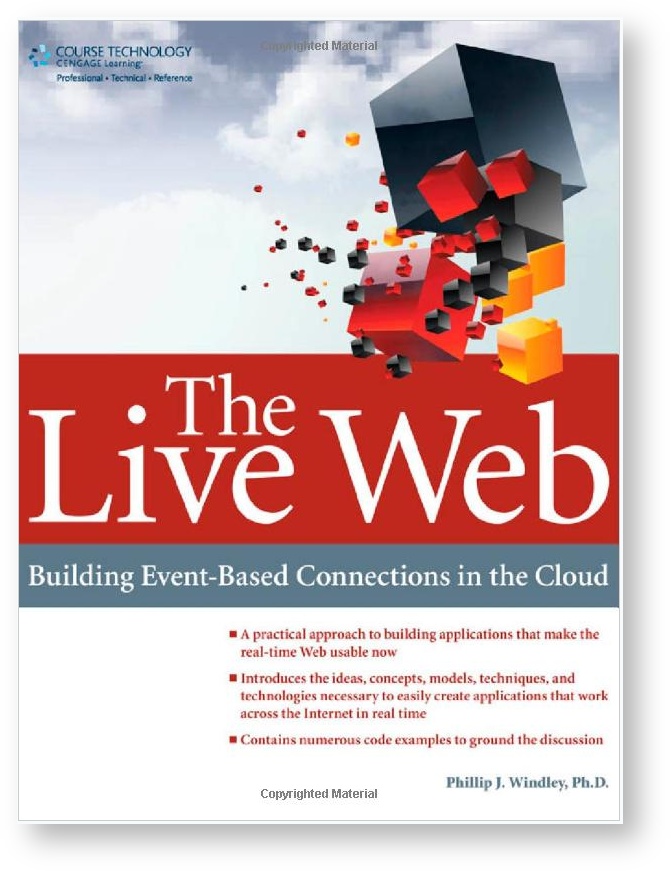
My Books